-
+86-13925102900
- quzkoon168@gmail.com
- Quan zhiguang (Guangzhou) Intelligent Technology Co., Ltd.


+86-13925102900

Working on a construction site is a serious test for any equipment. From excavators to loaders, all machinery requires regular and quality maintenance, and lubrication is one of the key aspects. And if we talk about accurate and convenient lubrication methods, thengrease gun for construction equipment- your faithful assistant. But which syringe to choose, how to use it correctly and what features should be taken into account? Let's take a closer look.
Imagine an excavator operating in harsh conditions: dust, dirt, vibration, temperature changes. All these factors put enormous pressure on the components and parts of the machine. Without proper lubrication, friction between moving parts increases, which leads to wear, overheating and, ultimately, costly repairs. Regular and correct lubrication extends equipment life, reduces maintenance costs and ensures trouble-free operation.
Don't underestimate the importance of choosing the right lubricant. Different parts and operating conditions require different types of lubricants. For example, for bearings in heavy equipment, more viscous lubricants are used that can withstand high loads, and for precision mechanisms, lighter and more fluid ones are used. Using the wrong lubricant can have serious consequences.
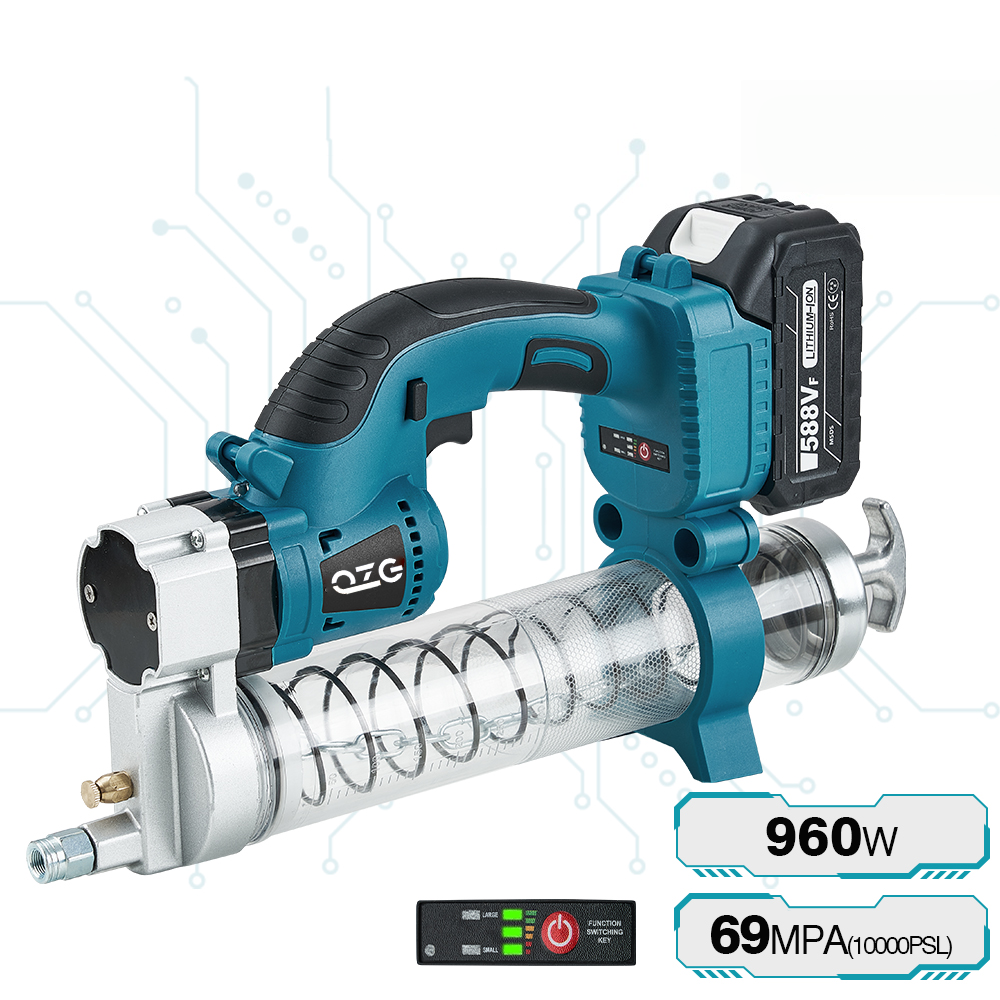
The market offers a wide rangegrease guns for construction equipment. They differ in design, volume, materials of manufacture and scope of application. Main types:
This is perhaps the most popular type. They are equipped with a magnet that fixes the syringe on metal surfaces, allowing you to work with your hands. This greatly facilitates the lubrication process and reduces the risk of contamination. Magnetic syringes are good for lubricating bearings, joints and other hard-to-reach places.
Such syringes allow you to precisely control the amount of lubricant, which is especially important for parts that require a minimum dosage. They are often used to lubricate precision machinery such as hydraulic cylinders and pumps.
Ideal for lubricating hard-to-reach areas that require the syringe to penetrate to a significant depth. They are used to lubricate gearboxes, transmissions and other complex mechanisms.
Designed to work with high lubricant pressures. Used mainly in hydraulic systems and other devices requiring intensive lubrication.
Choosing the right onegrease gun for construction equipmentdepends on several factors:
When choosing a syringe, you should pay attention to the quality of the materials used. It is better to give preference to syringes made of durable and corrosion-resistant steel. It is important that the syringe is easy to use and has a reliable lubricant supply mechanism.
Working withgrease gun for construction equipmentrequires compliance with security measures. Here are some simple rules:
Recently we helped our partners working with excavatorsQuanzhiguang (Guangzhou) Intelligent Technology Co., Ltd.. They encountered a problem with bearing wear in a hydraulic cylinder. Normally, maintenance would require significant time and downtime. But thanks to the use of specialgrease gun for construction equipmentWith a long piston stroke, mechanics were able to lubricate the bearings quickly and efficiently, preventing costly repairs and getting the excavator back up and running in no time. Using a suitable lubricant (for example, lithium grease WD-40, which can be purchased at https://www.gzqzg.ru/) also played an important role.
In another case, a magneticgrease gun for construction equipmentfor lubricating hard-to-reach joints on the loader. The magnet ensured reliable fixation of the syringe, which allowed mechanics to work with their hands and avoid contamination of parts. This significantly speeded up the service process and improved its quality.
To yourgrease gun for construction equipmenthas served you for a long time and reliably, it is necessary to carry out regular maintenance and care:
Properly selected and usedgrease gun for construction equipment– this is the key to long and uninterrupted operation of your equipment. Don’t skimp on the quality of the tool and don’t forget to follow safety measures. And remember, timely and high-quality maintenance is an investment in the future of your equipment.